Understanding demand for broken rice and its potential food security implications in Colombia
University of Arkansas
Partner institutions

University of Arkansas
Fayetteville, AR, USA
A public land-grant research university in Fayetteville, Arkansas, with long-standing programs in agricultural and food science.
How Vibe analyzers were used
Rice samples purchased by consumers in Colombia were processed with a Vibe QM3 Rice Analyzer to measure broken-grain percentage, chalk percentage, length, and width, linking milled-rice quality to consumer demand and food security implications.
Study overview
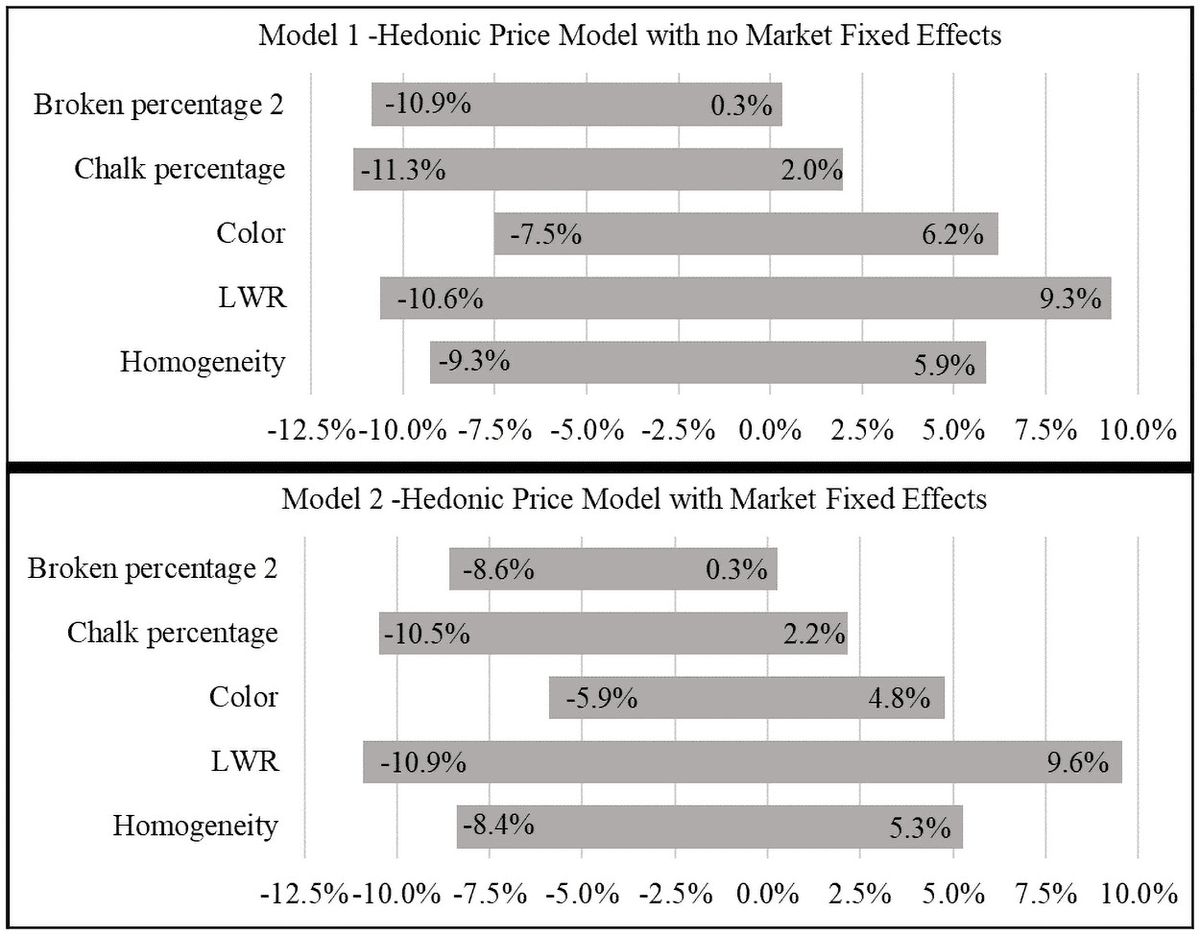
Rice is a crucial contributor to global food security, and irrigated paddy rice is a water-intensive crop that contributes to greenhouse gas emissions, so improving the efficiency of using rice as food matters for sustainability. This study examines consumer demand for broken rice in Colombia. Rice samples collected from consumers who purchased rice independently at supermarkets were processed for physical analysis, using a Vibe QM3 Rice Analyzer alongside a Rapid Viscosity Analyzer to determine broken-grain percentage, chalk percentage, average length, average width, and breakdown viscosity. The Vibe QM3 was calibrated to the Colombian rice quality standard. Findings inform how broken-rice content relates to consumer preferences and potential food security outcomes.
Topics and keywords
Related crop analysis
Bibliographic details
Year: 2024
Publication: Journal of Agriculture and Food Research
DOI: 10.1016/j.jafr.2023.100884
Institutions: University of Arkansas
More research using Vibe
Explore additional studies applying Vibe analyzers in grain and seed phenotyping workflows.