Are Rice Markets in Bangladesh Efficiently Pricing Rice Based on Quality? An Empirical Assessment
University of Arkansas

Partner institutions

University of Arkansas
Fayetteville, AR, USA
A public land-grant research university in Fayetteville, Arkansas, with long-standing programs in agricultural and food science.
How Vibe analyzers were used
A Master's thesis assessing whether Bangladeshi rice markets efficiently price rice by quality, using a Vibe QM3 Rice Analyzer to objectively measure broken-grain percentage, chalk percentage, color, size, and homogeneity across retail rice samples.
Study overview
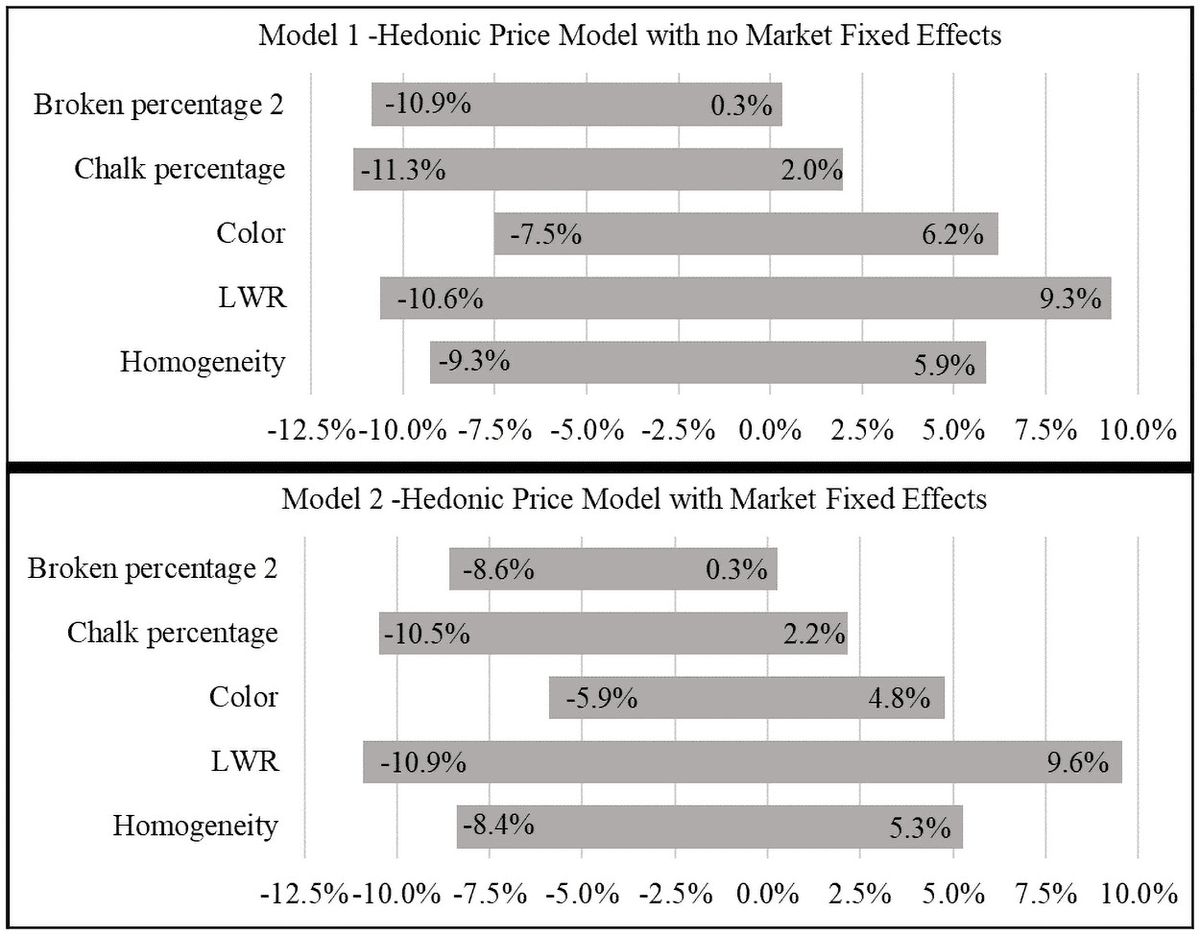
Rice is the main staple in Bangladesh, accounting for 65-70 percent of daily calorie intake, making efficient quality-based pricing important for food security. This thesis assesses how effectively rice prices in Bangladesh reflect rice quality attributes such as broken-grain percentage, chalk percentage, kernel size and shape, color, and homogeneity, using a pure hedonic price model. Rice samples were collected from vendors in 10 retail markets across Dhaka and processed using a Vibe QM3 Rice Analyzer, calibrated to the Bangladeshi standard for milled rice, to objectively assess attribute levels feeding into the pricing analysis.
Topics and keywords
Related crop analysis
Bibliographic details
Year: 2021
Publication: University of Arkansas Graduate Theses and Dissertations (ScholarWorks@UARK)
Institutions: University of Arkansas
More research using Vibe
Explore additional studies applying Vibe analyzers in grain and seed phenotyping workflows.